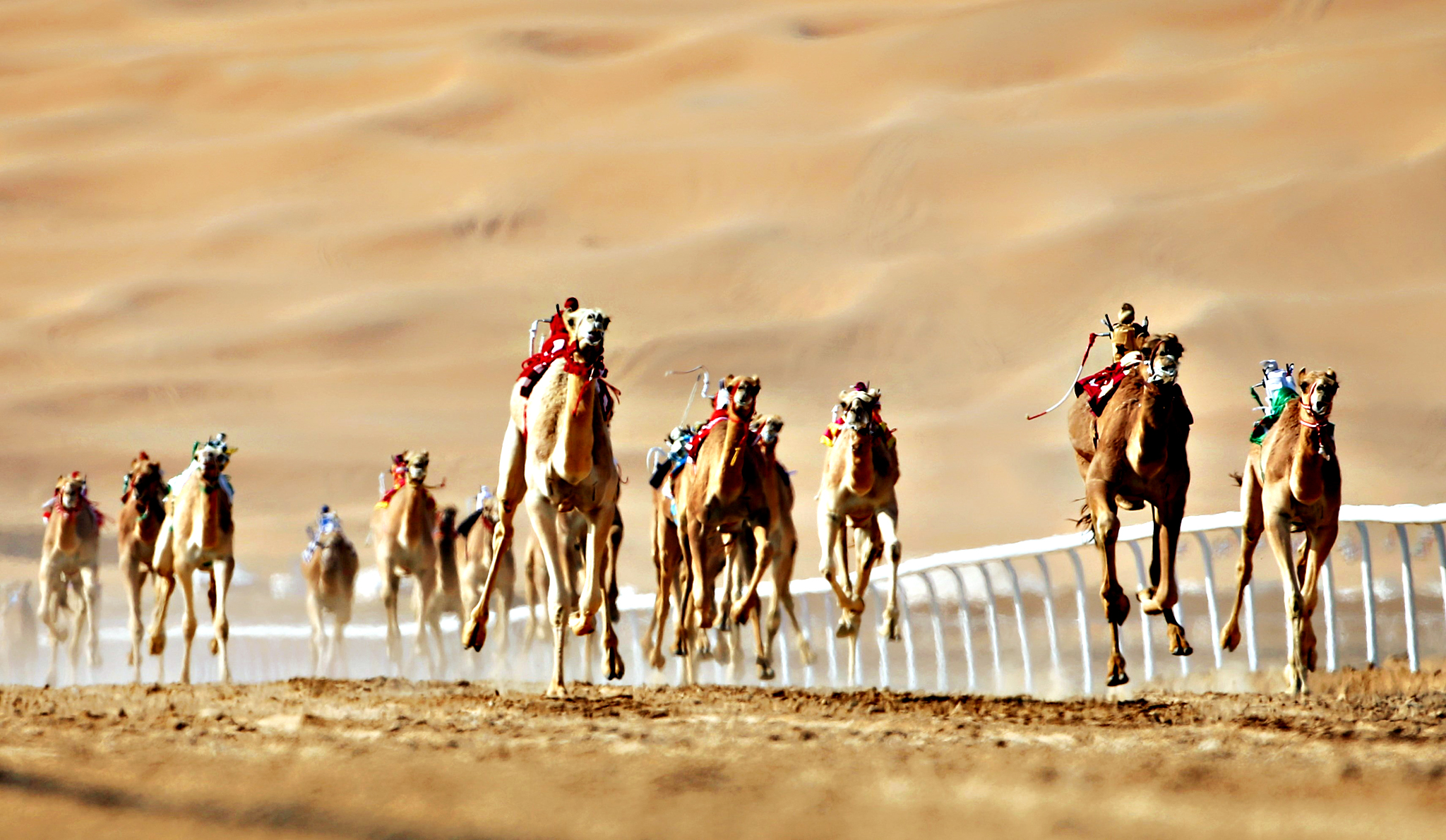
Camels have been central to life in the Arab world for centuries, historically serving as the main means of transport across vast deserts. Known as “The Ship of The Desert,” the camel symbolizes endurance, survival, and Bedouin heritage. Over time, this noble animal became not only a working animal but also a star of camel racing which is one of the most thrilling traditional sports in the region.
Today, camel racing is a high‑speed desert sport where trained racing camels compete on open tracks, often watched by thousands of fans and royal families. The races usually run from October to April, when the weather is cooler and more suitable for both animals and spectators.
Camel Racing as a Cultural Heritage

In UAE, Saudi Arabia, Qatar, Kuwait and Bahrain, camel racing is not just a sport, it is a living representation of the Arab identity and heritage. Millions of dollars are spent by royal families, tribal sheikhs, and local camel owners on breeding, stables, and training and almost treat champion camels as national symbols.
The camel Racing season is between October and April when the weather in the desert is cooler.

Saudi Arabia King Abdulaziz camel festival (Riyadh): Combines camel racing with traditional sports, poetry, and handicrafts. Racing prizes in 2026 are estimated to be over SAR85 million, comprising 233 races and 35,000 camels in 2026 (SaudiCamelSport.com).
UAE- Al Marmoom Heritage Festival (Dubai): High‑tech racing surface with grandstands, VIP areas, and regular festivals throughout the season. Here the final event resulted in the award of prizes to the tune of AED8.95 million (Khaleej Times).
Al Shahaniya Racetrack: Hosted the Jazilat Al‑Atta Camel Festival in January–February 2026, with ticket prices from QAR200–500 (The Peninsula Qatar).Hosted the Jazilat Al‑Atta Camel Festival
Al Marmoom Heritage Festival (Dubai): The finale awarded AED8.95 million in prizes (Khaleej Times).
Qatar – Al Shahaniya Racetrack: Hosted the Jazilat Al‑Atta Camel Festival in January–February 2026, with ticket prices from QAR200–500 (The Peninsula Qatar).
Kuwait – Kabd Camel Racing Club: Weekly races with free entry, offering a unique spectator experience (Kuwait Times).
These venues are well‑maintained, with clear signage, toilets, food zones, and parking, making them suitable for families, international visitors, and local fans.
Camel Beauty Pegeants Festivals

Camel beauty contests, which are also known as Mazayen al-Ibl, are based not on speed but on elegance: the judges seek a long and curved neck, a sophisticated head, large eyes and lips, well set humps, and a graceful and slow stroll. At the King Abdulaziz Camel Festival, the camels are classified according to the type of colour, which primarily includes Dark Majaheem and the Lighter Maggah. The light group is further categorised into famous colours like Waddah (bright white), Sheal (yellowish), Sofor (yellow with darker humps), Shiggah (off-white) and Homor (reddish). Every color and type has its enthusiasts and expert breeders, and the most beautiful queens could be sold in the millions of dollars as pets and status symbols.

The King Abdulaziz Camel Festival alone attracts approximately 30,000 camels and has a total of around 30 million dollars in prize money including both beauty and racing events, making it one of the richest animal events in the world. In 2024, global champions like the Welsh-owned camel dubbed Massakata won the international best beauty awards at Al-Sayahid and a white camel owned by another UK competitor, Jathaba, got third place, indicating that now people bring their best camels to Saudi Arabia (40 plus countries).

The Al Dhafra Festival of Abu Dhabi is another big beauty pageant and heritage festival, featuring thousands of camels and prize money amounting to approximately 110 million dirhams (approximately 30 million dollars) visitors are able to browse Bedouin markets, food stalls and heritage displays before the final camel-style pageant known as the Miss Camel. Recent foreign champions are a Welsh-owned camel known as Massakata, which won at a Saudi beauty pageant, and the so-called natural beauty of a camel named Mangiah Ghufran, which won at a Qatari festival, demonstrating the spread of entries to all parts of Europe and the Gulf.
In simple words, camel racing involves a combination of speed, stamina and track training whereas beauty pageants use physical perfection, coat quality and traditional breed criteria on a show ring. Due to the large prize money, some owners have attempted to alter lips, noses, and humps with Botox, fillers, silicone and muscle relaxants causing immediate disqualification and fines to the camel owners when they find these cosmetic alterations at shows such as the King Abdulaziz Festival or the Al Dhafra Festival in Abu Dhabi.
To the visitors, these beauty festivals provide the ideal opportunity to take a glimpse at traditional tents, markets and folk performances in addition to the camel rings. It is advisable to dress simply, abide by the family area regulations and visit the heritage village where you can purchase localized foods, perfume and other souvenirs and then stand to watch the final parade as the winning camels and their owners go round in front of TV cameras and jovial crowds.